





Implementation of the Curriculum
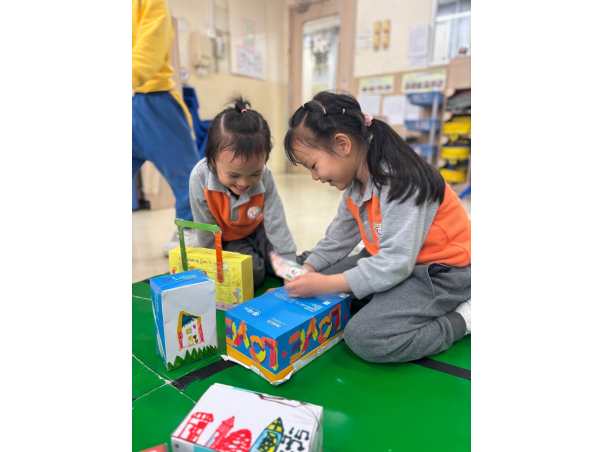
From 2018 to 2020, the school participated in the Quality English Language Education at Pre-primary Level Project organised by the Standing Committee on Language Education and Research (SCOLAR). The school further enhanced its school‑based English curriculum by adopting a story‑based approach and implementing diversified teaching strategies such as hands‑on experiences, real- life experience art and craft activities, and games. These strategies provided children with a rich and authentic English learning environment and learning experiences.
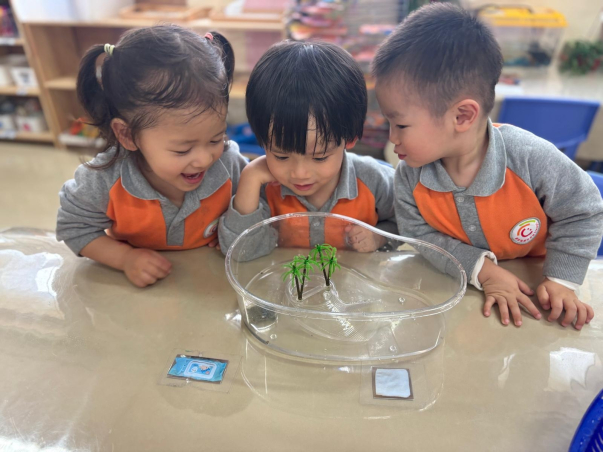
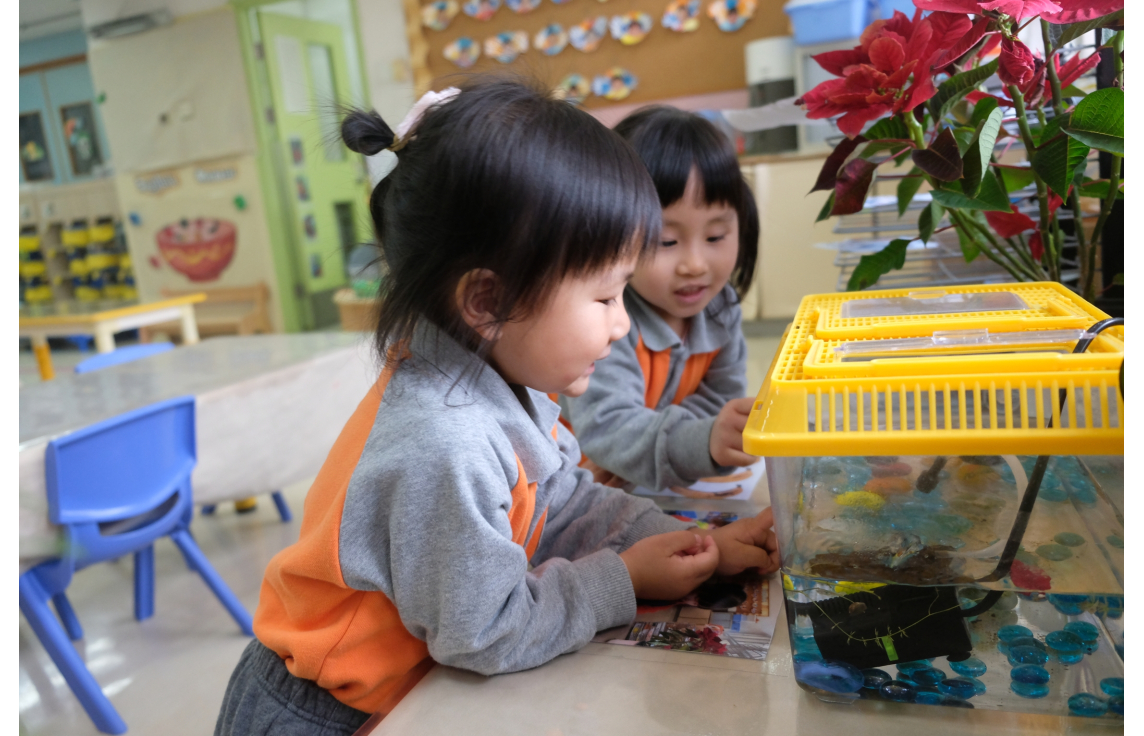
In 2020–2021, the school took part in the School‑based Professional Support Service provided by the Education Bureau. Free play was implemented on campus through systematic and close collaboration between the Education Bureau’s support personnel and the school’s teaching team. This initiative enhanced teachers’ professional knowledge and competencies, enabling children to explore freely and autonomously through play, construct new knowledge, and develop logical thinking, creativity, problem‑solving skills, as well as positive values and attitudes.
From 2022 to 2024, the school joined “Using Picture Book to Promote Positive Education
in Pre-School Through Home-School-Community Collaboration” organised by The Education University of Hong Kong. The programme strengthened collaboration among the school, parents, and the community, enhanced teachers’ understanding of positive education, and supported children’s positive development through the use of picture books and community resources.
From 2024 to 2026, the school arranged for teaching staff to participate in Montessori teacher training, which included “Montessori Pedagogy” and “Montessori Classroom Management.” Through systematic professional training, teachers gained a deeper understanding of Montessori educational philosophy and teaching methods, mastered knowledge of children’s learning characteristics and sensitive periods at different developmental stages, and enhanced their ability to observe and guide children’s learning. The school has established a Montessori classroom that provides children with opportunities for self‑directed learning and exploration. Through daily routines, classroom environment design, and teaching materials, children’s sense of order, logical thinking, fine and gross motor development, and sense of responsibility are fostered.
The school also arranges for teachers to participate in professional training on the “Scientific Approach to Teaching Chinese Characters to Young Children.” This training enables teachers to understand the philosophy and principles of the approach and to deepen their understanding of the evolution of Chinese characters within Chinese culture.
The school has established a “Discovering Chinese Characters Classroom,” providing children with a rich language‑learning environment. This setting stimulates children’s curiosity and interest, and through a progressive approach, guides them to grasp the form, pronunciation, meaning, radicals, word formation, and sentence construction of Chinese characters, enabling them to extend their Chinese language learning into daily life applications.
Education Objective
Provide child care services and instruct children to learn according to their potential and development needs.
Join hands with parents to shoulder the responsibility of nurturing children
with an all-round development in ethics, intellect, physique, social skills and aesthetics,
enabling them to grow up healthy and happy.
Overall Programme Objectives
Assist children in building self-confidence and positive self-images.
Nurture children to be considerate individuals who care for and cherish the people and matters they encounter.
Arouse children's interests in learning, and assist them in establishing a positive learning attitude and developing good habits.
Develop children’s multi-dimensional and logical thinking capabilities and enhance their problem-solving potential.
Strengthen children's resilience in coordinating their body parts and enhance their self-caring capability.
Cultivate children with good social skills so that they can communicate with people properly, respect others and develop a sense of responsibility.
Inspire children’s appreciation, creativity and imagination; and educate them to cherish life and value good things in everyday life.
Join hands with parents to shoulder the responsibility of nurturing children.
Teaching Elements
The holistic learning activities developed by our Curriculum and Development Committee encourage children to learn through explorations.
In line with the school-based curriculum features, the activities cover a broad variety of pedagogical elements.